
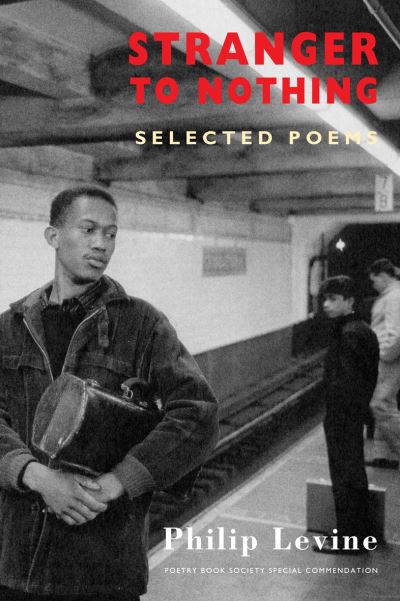
Description
Philip Levine was the authentic voice of America’s urban poor. Born in 1928, the son of Russian-Jewish immigrants, he spent his early years doing a succession of heavy labouring jobs. Trying to write poetry ‘for people for whom there is no poetry’, he chronicled the lives of the people he grew up with and worked with in Detroit: ‘Their presence seemed utterly lacking in the poetry I inherited at age 20, so I’ve spent the last 40-some years trying to add to our poetry what wasn’t there.’ Much of his poetry addresses the joys and sufferings of industrial life, with radiant feeling, as well as painful irony: ‘It took me a long time to be able to write about it without snarling or snapping. I had to temper the violence I felt toward those who maimed and cheated me with a tenderness toward those who had touched and blessed me.’ Always a poet of memory and invention, Philip Levine has continually written poems which search for universal truths. His plain-speaking poetry is a testament to the durability of love, the strength of the human spirit and the persistence of life in the face of death. Poetry Book Society Special Commendation.


 John Clare
  The Sun of Hereafter
  Negative of a Group Photograph
  Pretend You Don't Know Me
  Flood
Flood  The Art of Derek Walcott
  25th Anniversary of the Death of Dylan Thomas 1914-1953
  Silly Rhymes and Limericks
  The Visitations
  Book of Mercy
  River Lane