

Description
In Quennets Philip Terry develops a sonnet-like form invented by the Oulipian poet Raymond Queneau. Across three sequences, the ‘quennet’ is reworked and refigured in response to three perimiter landscapes. The first sequence, ‘Elementary Estuaries’, is inspired by a series of walks along the Essex estuary, the poems’ appearance on the page suggesting the landscape’s expansive esturine vistas, its pink sail lofts and windswept gorse, beach huts and distant steeples. In the second sequence, written after a series of walks around the Berlin Wall Trail, or Mauerweg, the form changes to reflect the physical, almost bodily tension of the wall as an architectural and social obstruction. The final sequence, ‘Waterlog’, retraces the steps of W. G. Sebald through Suffolk, and here the quennet’s newely elongated shape and ragged margin evoke the region’s eroding coastline, its deserted piers and power stations, electric fences and waterlogged fields. Terry’s project is bold in scope, his poems subtle in effect, a mix of sign and song, concerete and lyric, Oulipo and psychogeography. It is a work about boundaries, political, social, and natural, and about the walk as a critical apparatus through which these fields are shown to connect.
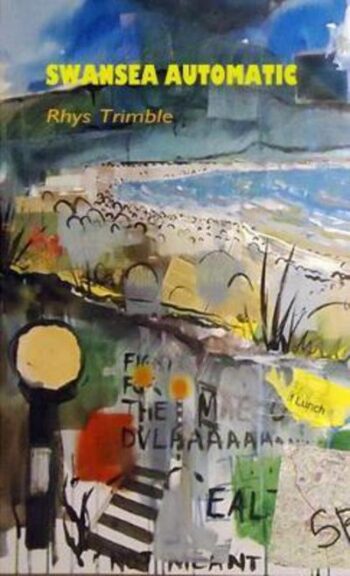





 The Onion House
 Selected Poetry
 Bridge 116
 Being Alive
 A Hospital Odyssey
 Let Us Compare Mythologies
 Chameleon
 Gold from the Stone
 The Sea Migrations
 New and Selected Poems (Book & DVD)
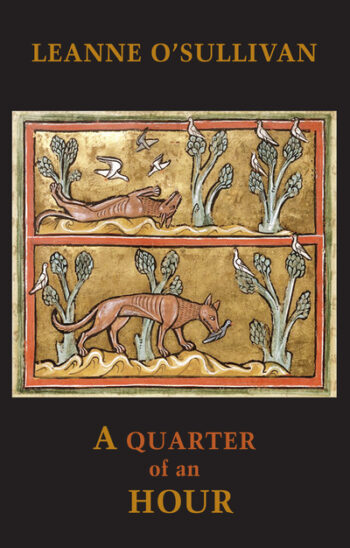 A Quarter of an Hour
 The Tamarit Poems
 States of Happiness
 Soemps
 Old Possum's Book of Practical Cats
 The Verandah Poems
 Steep Tea
 New and Selected Poems. Volume One
 New and Selected Poems, Volume Two