
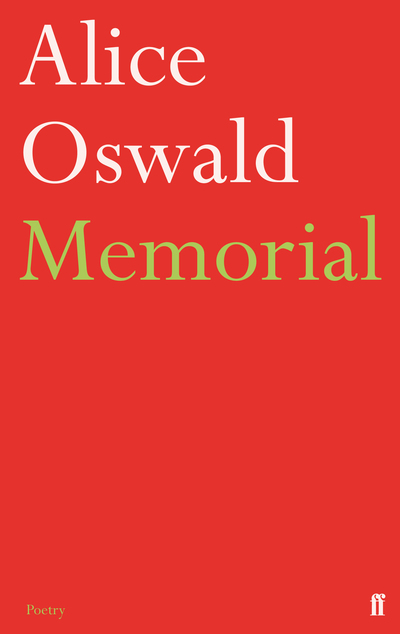
Description
Matthew Arnold praised the Iliad for its ‘nobility’, as has everyone ever since — but ancient critics praised it for its enargeia, its ‘bright unbearable reality’ (the word used when gods come to earth not in disguise but as themselves). To retrieve the poem’s energy, Alice Oswald has stripped away its story, and her account focuses by turns on Homer’s extended similes and on the brief ‘biographies’ of the minor war-dead, most of whom are little more than names, but each of whom lives and dies unforgettably – and unforgotten – in the copiousness of Homer’s glance.
‘The Iliad is an oral poem. This translation presents it as an attempt – in the aftermath of the Trojan War – to remember people’s names and lives without the use of writing. I hope it will have its own coherence as a series of memories and similes laid side by side: an antiphonal account of man in his world… compatible with the spirit of oral poetry, which was never stable but always adapting itself to a new audience, as if its language, unlike written language, was still alive and kicking.’
– Alice Oswald
 What Rhymes with Sneeze?
  Santa's Greatest Gift
  There Are Girls Like Lions
  Old Possum's Book of Practical Cats
  Strong in the Rain
  The Art of Scratching
  15 Poems: The Lillabulero Poetry Pamphlet Series Number One
  Selected Poems
  Old Possum's Book of Practical Cats
  John Clare
  Words the Turtle Taught Me
  A Little Body Are Many Parts
  Being Alive
  Thomas Lux
  You Can't Take an Elephant on the Bus
  The Mighty Stream
  Bridge 116