

Description
A.S.J. Tessimond (1902-1962) was one of the most individual, versatile and approachable voices in 20th century poetry. Influenced at first by the Imagists, his poetry is remarkable for its lucidity and formal exactness and for its witty, humane depiction of life in the modern city. Out of step with his contemporaries – both Pound and Eliot as well as Auden and his followers – Tessimond was always a marginalised figure, publishing only three collections in his lifetime, one in each decade from 1934 to 1958. Yet his work has been popular enough to be included in numerous anthologies and has been a perennial favourite with listeners of radio programmes such as Poetry Please. This edition is a long awaited reissue of the posthumous Collected Poems edited by his friend the writer Hubert Nicholson, who characterised his poems as ‘beautiful, shapely, well wrought and elegant, whether in public of private mode’, penetrating the heart of both London and England: ‘His hallmark, his unique contribution to the body poetic, is to be found in those poems encapsulating urban types – and the institutions that shape and demarcate their lives, the popular press and radio, films, money, advertising, houses, tube stations, the implacable streets…He wrote a good deal about love, its hopes and ecstasies and its frustrations and sadness.’ As Nicholson has pointed out, Tessimond wrote many poems in the first person, ‘but they are not in the least egotistical. They are imaginative projections of himself into types, places, generalised Man, even God or Fate.’ He was ‘entirely a man of the city’, his ‘landscape’ pieces depicting Hyde Park Corner, Chelsea Embankment, a Paris cafe and even an overcrowded bus in Jamaica. ‘He loved the life around him and was a meditative as well as an observant man. He reflected, and reflected on, the passing show, kindly, honestly, and with wit and wisdom.’ Tessimond has been described as an eccentric, a night-lifer, loner and flaneur. He loved women, was always falling in love, but never married. He suffered from frequent bouts of depression, alleviated neither by a succession of psychiatrists nor by electric shock therapy. The fact that he was plagued by self-doubt and was fiercely critical of his own work must have contributed to his work being too little published and too much neglected, despite being championed by an extraordinary variety of admirers, from Michael Roberts, John Lehmann and Ceri Richards to Bernard Levin, Maggie Smith, Bill Deedes and Trevor McDonald. Maggie Smith read his poem ‘Heaven’ at the funeral of Bernard Levin, for whom Tessimond was ‘a quiet voice, which makes it easy to miss the resonances, but they are there, and although I doubt if he will achieve a widespread fame, I am sure that any future anthology of twentieth-century English verse that does not include a sample of his work will be less complete, less representative and less valuable than it might have been.’ In an obituary for The Times, Tessimond’s friend, the critic George Rostrevor Hamilton, said he was ‘modest about his poetry, and sometimes thought it too small to be worthwhile. But over and above a dry wit and fancy, he had an exquisite feeling for words, meticulous but, like himself, without affectation. In his own way he was unrivalled.’




 A Quarter of an Hour
 Spiritlands
 This Is Yarrow
 The Complete Poems of Anna Akhmatova
 The Skies Above My Eyes
 A March Calf
 Steep Tea
 Floss
 The Barbarians' Return
 The Tamarit Poems
 Doctor Who: Now We Are Six Hundred: A Collection of Time Lord Verse
 The Handle of the Door
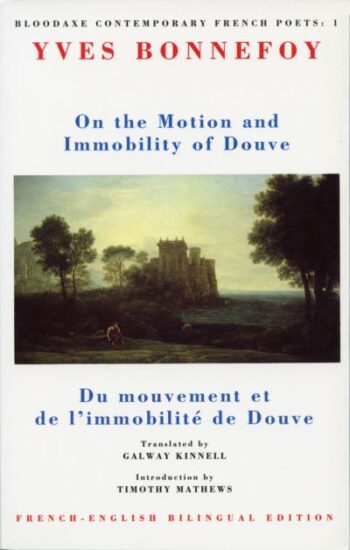 On the Motion and Immobility of Douve
 100 Dogs
 Old Possum's Book of Practical Cats
 Being Alive
 How To Write Poems
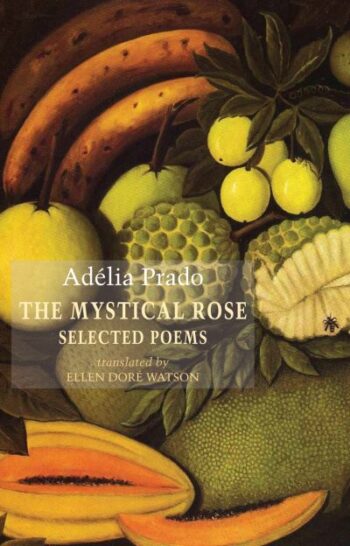 The Mystical Rose
 Dog Poems
 Hansel and Gretel
 Gold from the Stone
 Love Speaks Its Name: Gay and Lesbian Love Poems (Everyman Pocket Poets)
 The Art of Scratching
 Negative Space
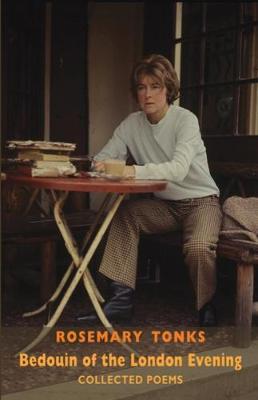 Bedouin Of The London Evening: Collected Poems
 The Lover's Pinch
 Words the Turtle Taught Me
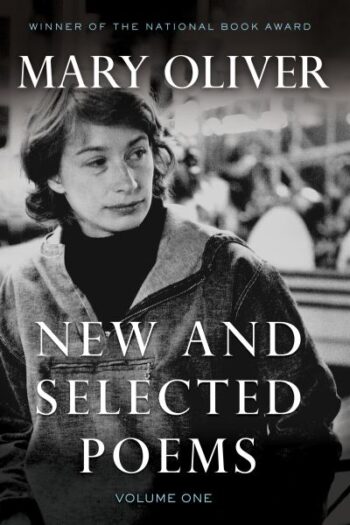 New and Selected Poems. Volume One
 One Cheetah, One Cherry
 Snaring Heaven
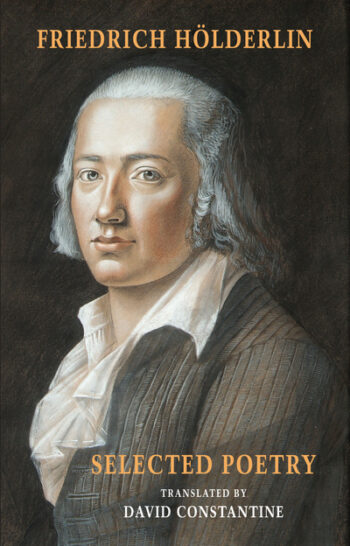 Selected Poetry
 My Shouting, Shattered, Whispering Voice
 Notebook of a Return to My Native Land